
Idiosyncratic systems
We like thinking in systems for our marketing operations. As a general rule, the more consistent you can be for anything in life, including marketing, the more successful you will be.
To be sure, marketing is indeed a system. That’s why we always assess or build a message and visual brand, then the website infrastructure, which is connected to analytics tools, integrations, and CRMs, and then work through the sending motion with podcasts, blogs, social media, and so on. All of it has to work together in harmony in order for marketing to work at all. That includes the vision, culture, and people behind the systematic motions.
I’ve created systems that can publish dozens of multimedia assets across a range of channels every month. I’ve created systems that can automatically pull new video recordings, lightly edit them, write copy, and then publish them on social media, which then auto-reposts to other social media accounts, after which the people who’ve engaged with those videos can be messaged and logged in a CRM for high-quality lead generation. I’ve built systems that create detailed markdown files to populate our GitHub repo so our team and tools can build assets across our portfolio programmatically.
However, I’m beginning to wonder if marketing can be over-engineered, too systematic, too perfect. Where’s the line? AI tools write and build marketing materials that seem a little too uniform, but what makes a lot of great marketing really work is its idiosyncratic nature. Perhaps it’s because it’s unexpected, it’s varied, it’s emulating the vicissitudes of being a human being.
Some days we’re full of energy. Some days we’re lugubrious. Some days we use words like lugubrious, and some days we use words like sad. We’re intellectual and snooty at times, and at other times we’re slangin’ Gen Z phrases found on Instagram. Sometimes we write short sentences, sometimes long, winding paragraphs. Sometimes we’re quoting Greco-Roman literature, and sometimes we’re quoting children’s books.
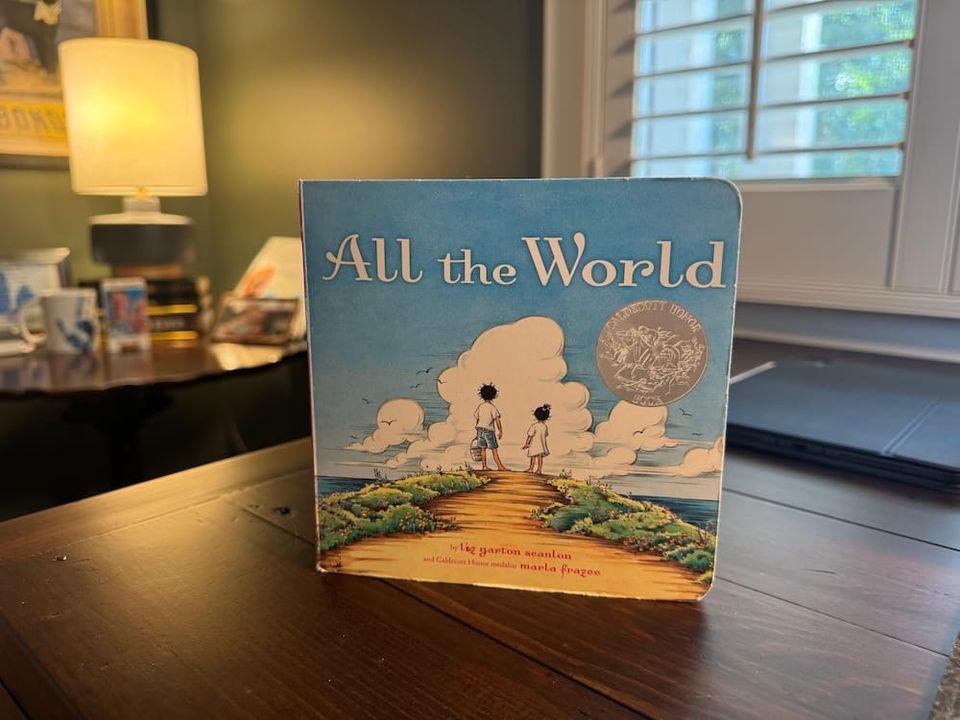
My favorite children’s book is called All the World, which describes the variations and contours of the human life. One stanza reads, “Tree, trunk, branch, crown / Climbing up and sitting down / Morning sun becomes noon-blue / All the world is old and new.” It’s a beautiful book on the rich texture of growing up. I find all my favorite art does that, like Thomas Cole’s The Voyage of Life and The Course of Empire.
There is a time for everything under the sun.
The challenge is that AI tools are statistical machines: They use huge gobs of data to guess the next most likely word, design pattern, or datum. By design they create a via media, but what you want is probably quite a lot of contrast. It’s how our brains work. Babies are drawn to strong blacks and whites, and adult brains are too.
We like polarizing political views and conspiracy theories simply because they’re different. We like confident assertions even if they’re wrong. The confidence creates contrast to a life that often seems so monotonous, confusing, tedious. We like people who are different. They stick in your mind for good or ill. A guy who cuts hair at my barber shop is hilarious, off-color, totally carpe dieming his whole life, if you know what I mean. I’ll never forget his name or what he says because it’s so atypical. A takeaway for marketers could be that, if your competitors’ visual brands are all blue, go green or highlighter yellow. Stand out. Stake a claim.
As AI slop, with its uniform layouts and paragraph sizes, increasingly floods our feeds, it raises the stakes on standing out and being singular, unique. David Senra recently interviewed Tobi Lütke, the CEO of Shopify, and they both talked about how it’s better to build a product that’s different even if it’s worse. The difference alone is valuable.
So, the question rattling my brain today is this: How do you create contrast at scale? How do you build idiosyncratic systems?