What works in marketing now

Now that the first two quarters of the year are over, I spent some time reviewing how our portfolio has performed across channels, asset types, media formats, and more to discover how we can improve our clients’ performance for the remainder of the year. These clients are all B2B, but they’re different sizes in different industries with different audiences.
While we’ve built some incredible systems using the latest AI tools this year to achieve more speed and scale, great marketing still comes down to a few key components. Remember that the web version of Claude Code was released only in late October, and many MCPs and other tools were released this spring. We’re just getting started in the future of marketing.
So, here’s what I found in the data for a selection of our clients as well as some anecdotes.
1. Stories and people are everything.
We create all kinds of content across all kinds of media types and channels, but what we see work every time is a person telling an authentic story. That could mean sharing a personal anecdote about a moment of failure, a challenging conversation with a client or a family member, or a simple recognition of a fellow employee. I’d almost go so far to say that the business “purpose” and even the media type is irrelevant. Often that’s just plain text on LinkedIn or a newsletter, though we see similar performance on videos and podcasts, but the point is that it must be personal and it must be a story. Everything else is noise.
2. LinkedIn is the best channel for B2B.
Every company and channel has its own unique requirements, but overall LinkedIn is the dominant platform for reach, engagement, and new followers. It also has the most data on its users. That means platforms like Traxy, which we’re trialing now, can provide contact-level CRM data on users who engage with your content. This will help us build higher-quality lead lists, creating a whole new workflow for driving revenue. If I were a betting man—which I’m not—I’d bet on LinkedIn over everything else, though I do still fancy a damn good newsletter. The only caveat is that search still requires blog content and awareness still requires short-form video—more on that in a second. (Yes, podcasts still serve an important purpose.)
3. Reach does not equal resonance.
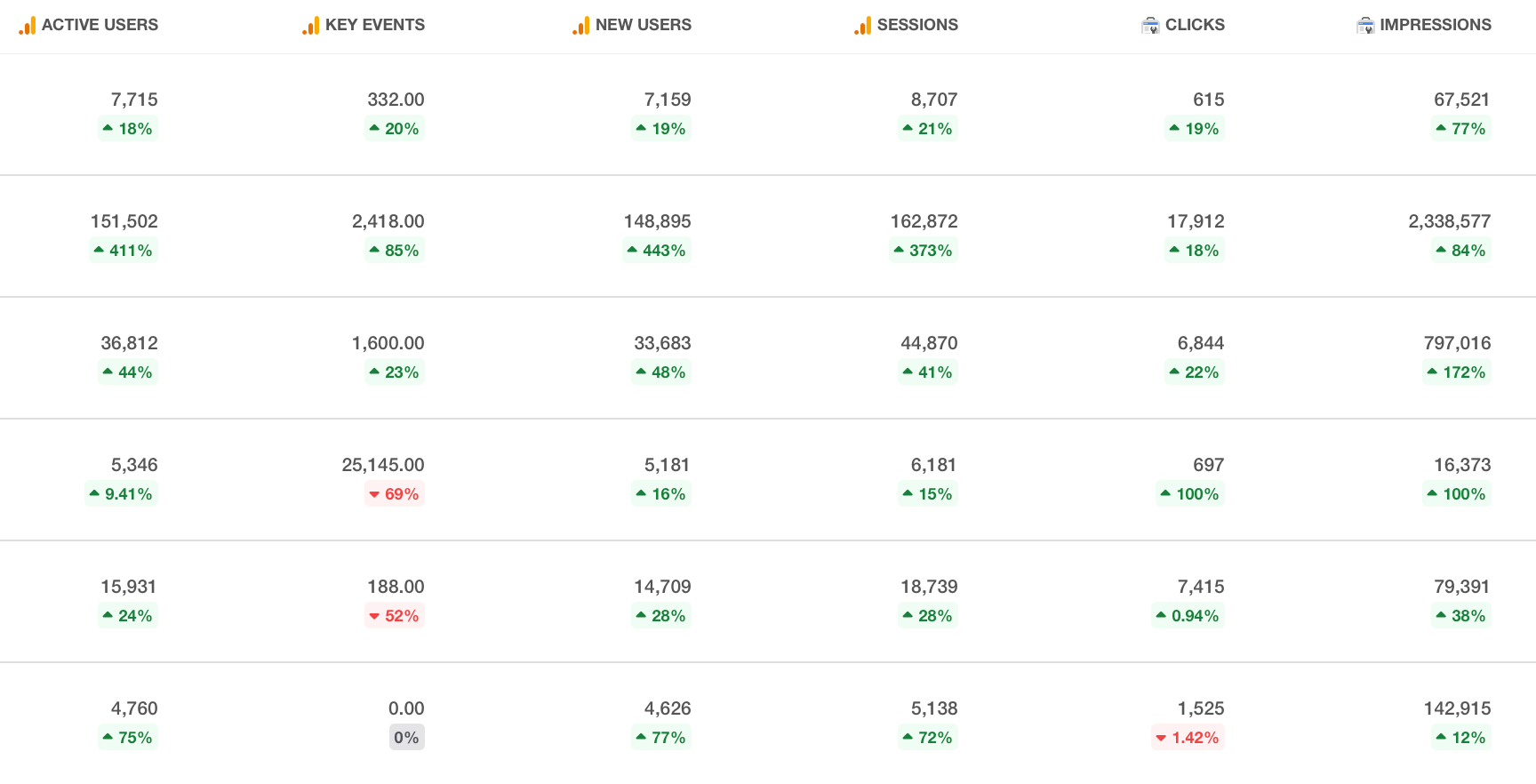
Some clients see less reach measured as impressions though they attain higher engagement rates. This means that fewer people see those posts, but when they do, they’re clicking, liking, and sharing the content more often. That leads to more traffic and better conversations with the material, which builds trust. Some clients also post less frequently while attaining higher engagement.
As a result, we’re less concerned about the quantity of the content and more concerned about its quality. The challenge is how to do that at scale, quickly, across all media types and channels. I’m leaning toward more in-depth interviews with clients’ SMEs to discover high-quality insights that are hard to surface alone. Time to put on my David Muir suit.
4. Bot traffic and spam are increasing fast.
One of our clients saw a 10x spike in website traffic over a week in March, most of which came from a data center in Springfield, Missouri. We’ve seen sustained increases in traffic across many of our accounts. We believe the likely cause is AI crawlers sucking up website content to feed their machines. The benefit is that we’re also seeing increased traffic from AI tools like ChatGPT, Claude, and Perplexity to our clients’ sites as a result of those digital vacuums, but the downside is that it’s distorting our data for true engaged users.
Similarly, I’m personally receiving more spam calls, cold outreach email, and LinkedIn requests at a scale I’ve never experienced before, and some of these spams and scams are becoming more sophisticated. Just this week I received an email from a colleague for an RFP for one of his clients, something that I would expect from him as we’ve worked together in the past. It was from his email address with an attached Claude Design PDF linking to a Framer website—all tools we use. But when the website wanted to log in to my Google account to see the “secure” files, I knew something was phishy, so I called my colleague and he confirmed it was fraudulent. I never fall for that stuff, but this one was particularly good, so be careful out there.
5. Organic search still works but needs more focused content.
The search landscape is experiencing huge disruption, so much so that Google’s leadership team at their I/O event last month unveiled new approaches to Search unlike anything we’ve seen before, including audio search, spatial computing, and more. I even hear rumors of a complete redesign of the chat-like Search interface we’ve known for decades.
Organic search still boasts high engagement and conversions with the right content, but in general we’re seeing more impressions and lower click-through rates, meaning AI overviews decrease website traffic—not a surprise. However, we’re seeing click rates increase with AI search—one client sees 60% engagement from AI queries. To get into AI platforms with your content, you still need lots of multimedia content since blogs and videos pull through relevant queries. YouTube is still the second largest search engine behind Google, and it shows up in regular search and AI tools: Shorts are often +90% of our clients’ YouTube accounts, while a video podcast serves as another client’s only content engine. All of that means a podcast still has a huge role to play in the future of marketing, though its outputs need more discipline.
Overall, the key is higher quality, more focused and people-first content across the funnel.
So, search and social drive great awareness, but the data shows a need for much more focused content targeted for long-tail, natural-language keywords, including blogs and videos. Alongside the speed and scale we’ve achieved this year so far from messaging to visual brand to websites and content, we’re aiming to double down on high-quality stories told by real people.
As always, we’re grateful to serve.