AI hope, not FOMO
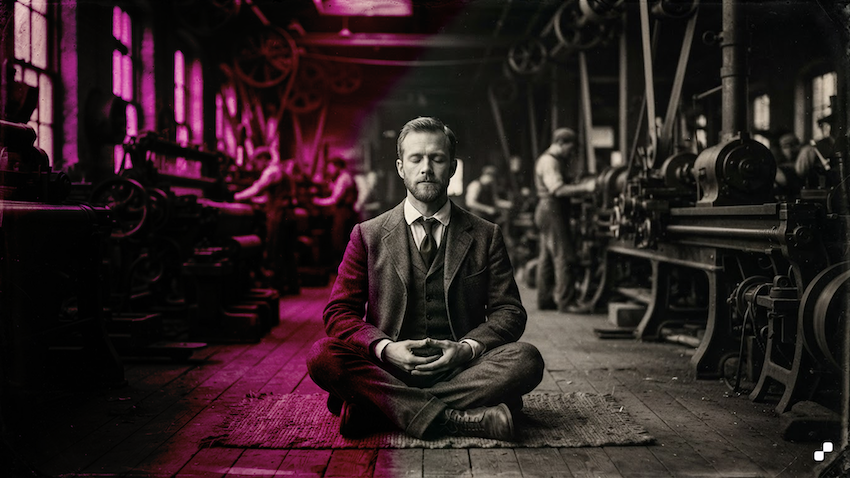
Yesterday I talked about AI FOMO—that fear and dread people are feeling about AI, about not getting their organizations up to speed, about losing their jobs or getting left behind. I think that tension is very real. And at the same time, I think there are a few key things you can do to feel more prepared.
Marketing is really becoming the tip of the spear of the AI transformation, and it touches a lot of other things within the organization—sales and, therefore, operations.
It’s an incredible time to be alive. It’s also a bit of a Wild West. But you don’t have to be fearful about it. That’s my thing. I want our work to be peaceful and not hurried, not creating more fear, uncertainty, and doubt in the market.
So here’s how I think about it, following our pattern of story, system, send. You can always check out more at docs.snapmarket.co.
Story: Document who you are.
The first thing is just documenting who you are as an organization in some kind of markdown-ready file system. We use GitHub, but there’s Obsidian, and Notion is a decent one. Document everything you do, so AI can reach into it and understand context.
Try to get recordings of how you do what you do in each part of the business. Those transcripts provide context to systems that can understand things and make decisions on your behalf. I don’t think you need to go full agentic world, where things are running autonomously. But documentation and building your story is, to me, the very first step.
System: Pick the right tools and connect them.
There are a couple of tools that are massively helpful from a marketing and sales operations standpoint:
- Linear for project management. We take call notes and docs clients send us and get Claude to build out whole projects, milestones, tasks, and due dates.
- Framer for the website. We build pages, landing pages, and forms from Claude or from Framer’s own agent.
- Attio for the CRM. It was built for this AI era, so people interacting with your website become records you can update.
- Loops for the newsletter. Paired with Attio and Framer, Claude can read contact lists and create workflows like an onboarding sequence.
- Ordinal for social, including publishing for your leadership team on LinkedIn and YouTube.
We picked the right horses—platforms that are building the future of sales and marketing—so we don’t have to set up crazy custom automations or build custom tools. My hesitation with going really custom is that you’ll become a developer when you don’t need to be. Focus more on the strategy, the sales side, and the people side of things, because AI can’t replicate that.
Send: Show up regularly.
From there, it’s just sending regular content: videos like the one above, a podcast, a well-written newsletter. I’m a huge fan of newsletters. I think it’s the best channel out there for many reasons. LinkedIn and YouTube are the other huge ones.
So don’t worry about it. But it is something that’s changing, and you can get on board really quickly by setting up the right tools. I think it’s something a marketing agency is perfectly suited to help with, because it touches so many other aspects of the business.
If you’re feeling that way, I’d love to help. Reply and let’s chat.